Kaixiang Cui#, Ling Zhang#, Liping Ding,* Haonan Peng,* Yu Fang. Adv. Colloid Interface Sci., 2026, 353, 103856. DOI: 10.1016/j.cis.2026.103856
Nano-luminescent materials serve as the core fundamental materials in the fields such as optoelectronic devices, bioimaging, anti-counterfeiting sensing, and their photostability, structural tunability and functional diversity directly determine their application values and development potential. Silica (SiO₂), with its excellent chemical stability, structural designability and biocompatibility, has become a key carrier and regulatory unit for constructing high-performance nano-luminescent materials, and is widely used in the design and preparation of various nano-luminescent material systems. However, there is still a lack of systematic review on the relationship between the structural roles of SiO₂ and the properties of different types of nano-luminescent materials. In particular, there is a shortage of comprehensive and systematic mechanism sorting on the interfacial regulation effect on its photophysical processes from the perspective of structure-function coupling, which has become one of the important bottlenecks restricting the breakthrough of SiO₂-based nano-luminescent materials towards multi-functional and practical directions.
To address this key issue, based on the relevant research work carried out by our research group in recent years, a systematic review of the role and mechanism of SiO₂ in constructing nano-luminescent materials was conducted, and three core functional mechanisms of SiO₂ were clearly summarized: first, as a physical barrier to shield external environmental interference, it can effectively block the material degradation process caused by external factors such as water and oxygen, thereby significantly improving the chemical stability and photostability of nano-luminescent materials; second, precise regulation of material structure is achieved through spatial confinement effect and interface engineering, and relying on its mesoporous framework structure, abundant surface chemical properties, as well as the controllable adjustability of pore size and defect states, the precise loading and integration of luminescent units are realized, and further the customized regulation of material optical properties and energy transfer paths is achieved; third, functional integration and expansion are realized by means of advanced structural design strategies such as core-shell, Janus, and chirality, endowing SiO₂-based nano-luminescent materials with multi-stimulus responsiveness and further unlocking their new application possibilities in cutting-edge fields such as bioimaging, high-end anti-counterfeiting, and intelligent sensing (Fig. 1).
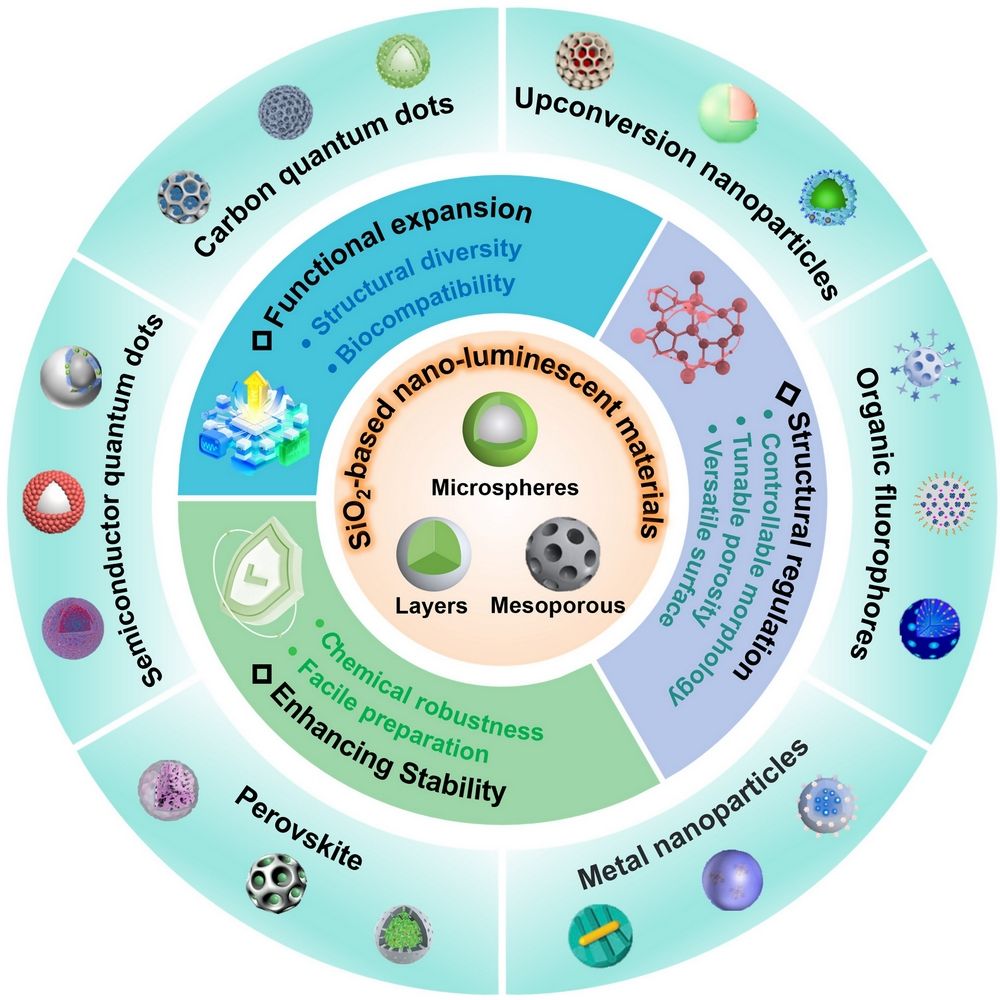
Figure 1 Schematic diagram of the role of SiO2 in the construction of nanoluminescent composites
On this basis, this paper also systematically reviewed the research progress of composite systems constructed by SiO₂ with six typical luminescent materials, including carbon quantum dots, inorganic quantum dots, upconversion nanoparticles, perovskites, metal nanoparticles, and organic fluorophores. It verified the universal rules of the above three core functional mechanisms and the material-specific regulation details, clearly elaborated the empowerment mechanism of SiO₂ on nano-luminescent materials from three dimensions: stability improvement, precise structural regulation, and functional expansion, and clarified the differential functional advantages of SiO₂ with different structural morphologies in the construction of luminescent materials. Meanwhile, this review directly addresses the core challenges currently facing the development of silica-based nano-luminescent materials, such as large-scale synthesis, extreme environmental stability, and biosafety risks, and proposes an integrated development strategy of "intelligent design - precise regulation - green optimization", which points out the direction for the future research in this field.
First Authors: Cui Kaixiang and Zhang Ling, doctoral candidate, Shaanxi Normal University
Correspondence Authors: Prof. Ding Liping, Prof. Peng Haonan, Shaanxi Normal University
Full Text Link: https://doi.org/10.1016/j.cis.2026.103856





 Latest Updates
 Hot Text Ranking