
Hongtao Li, Yan Luo, Binbin Zhai, Helan Zhang, Yiping Zhang, Yanyan Luo*, Pei Wang*,Yu Fang*. ACS Applied Materials & Interfaces. 2026, DOI: 10.1021/acsami.5c25580
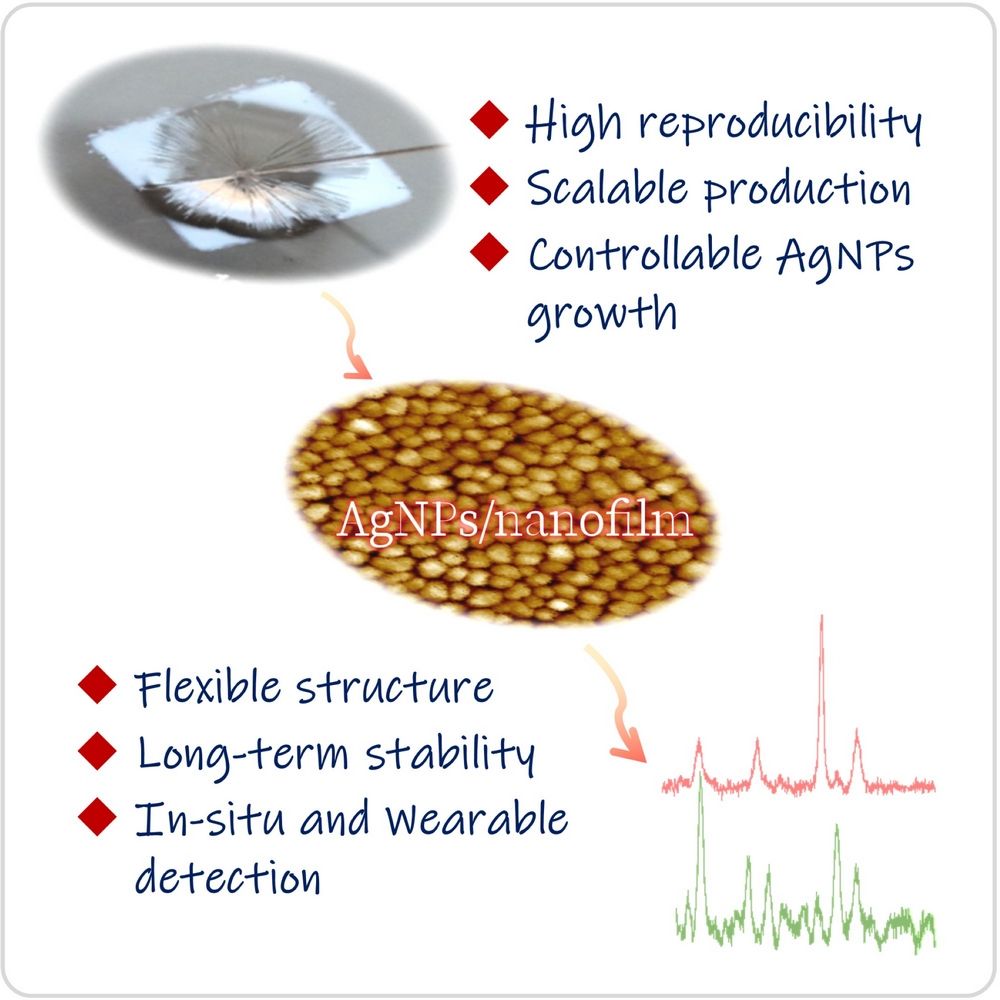
Surface-enhanced Raman scattering (SERS) technology, known for its near-single-molecule sensitivity and unique molecular “fingerprint” recognition capability, has become an indispensable tool in analytical science. The performance of SERS fundamentally depends on the enhancement capability of the active substrate. However, traditional rigid SERS substrates, such as silicon wafers or glass, suffer from inherent brittleness and a lack of mechanical adaptability, which prevents conformal contact with irregular or biological surfaces. This limitation significantly hinders their effectiveness for in situ, real-time analysis in field-based scenarios, such as food safety inspection and wearable medical devices. To circumvent these obstacles, flexible SERS substrates have emerged as a transformative alternative. Their low Young’s modulus enables seamless conformal contact with complex, nonplanar surfaces, such as fruit peels for pesticide residue analysis, while their high optical transparency facilitates direct in situ detection. Together, these properties enable efficient analyte enrichment via interfacial wicking or “swab-and-peel” sampling strategies.

Figure 1. SERS performance of the AgNPs/nanofilm substrate.
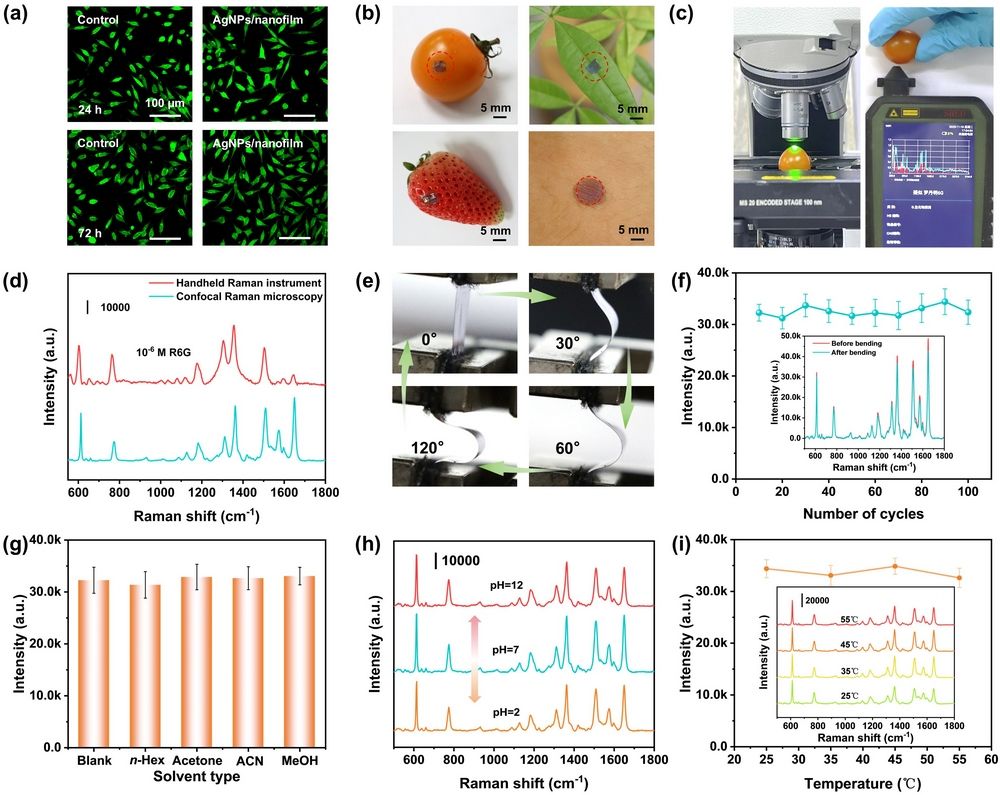
Figure 2. Comprehensive performance of the AgNPs/nanofilm substrate.
Building on our prior work, we have designed a free-standing nanofilm with a porous structure, high surface energy, and a dynamic covalent bond network, which serves as a spatial confinement reaction template. By precisely controlling the diffusion and reaction kinetics of silver precursors and reducing agents within the film pores, we achieved uniform and controllable growth of silver nanoparticles (AgNPs), preparing an AgNPs/nanofilm substrate with high “hotspot” density and robust interfacial bonding. Due to the rational structural design of the nanofilm, the substrate exhibits a high EF, ultrahigh sensitivity, excellent signal uniformity, outstanding stability, mechanical durability, and chemical tolerance. Moreover, when combined with a hand-held Raman spectrometer, the substrate enables reliable in situ detection of pesticide residues on fruit surfaces and metabolites in sweat, demonstrating its potential for rapid and accurate detection in complex real-world applications. This work provides a versatile, scalable material and process strategy for preparing high-performance, flexible SERS substrates for on-site detection.
First Author: Li Hongtao, master’s student, Shaanxi Normal University
Correspondence Authors: Prof. Fang Yu, R&D Engineers Wang Pei and Luo Yanyan, Shaanxi Normal University
Full Text Link: https://pubs.acs.org/doi/full/10.1021/acsami.5c25580





 Latest Updates
 Hot Text Ranking